

Nature Fuels is an Australian company, building a sustainable fuels platform around innovative, energy-dedicated feedstocks grown on marginal or degraded land and propagated through advanced tissue culture.

Overview of Nature Fuels
A large market set for significant growth
Low-carbon liquid fuels (LCLF) are essential for hard-to-electrify sectors—aviation, maritime, rail, and heavy road freight. Sustainable Aviation Fuel (SAF) alone could reach ~US$544bn in annual spend by 2050, with ~US$45bn of offtake already contracted today.
01
Australia’s opportunity
Abundant land and biomass potential, favourable logistics, a deep domestic market, competitive capital, and a strong policy environment position Australia to lead in LCLF.
02
The challenge: costs and sustainability
Current feedstocks are designed for food—not fuel. They are expensive, limited in scale, face land and water trade-offs, show variable carbon benefits, and compete with alternative uses.
03
The solution: Nature Fuels
Our approach targets innovative, energy-dedicated feedstocks grown on marginal and degraded land and propagated through advanced tissue culture, cutting costs and improving carbon intensity at scale.
04
A project development platform backed by the right team
Nature Fuels is developing a pipeline of LCLF projects, beginning with a ~100 ML/y greenfield facility using miscanthus as the primary feedstock. Led by Dr Fraser Thompson and partnering with NXT Biosciences on advanced tissue culture, backed by Trawalla.
05
Low carbon liquid fuels (LCLFs)  are liquid fuels produced with a lower carbon intensity than fossil fuels , including renewable diesel, sustainable aviation fuel (SAF) , and e-fuels .


They are crucial for decarbonising sectors like aviation, heavy transport, and shipping, which are difficult to electrify, and can be used in existing infrastructure.
Green fuel markets are set for a rapid growth
Demand for low carbon fuels in aviation and maritime (green methanol) alone could be worth over US$770 billion per annum in 2050.
US$770b
per annum in 2050
+400%
growth in next 25 years

Expected Sustainable Aviation Fuel (SAF) required for Net Zero in 2050, Billions of litres
Australia is ideally positioned to be a global leader in low carbon liquid fuels production
Abundant land
- Australia could produce ~14,000 ML (megalitres) of aviation fuel—about 70% of forecast 2050 demand—using only ~0.5% of national land.
- Australia has 450 million hectares of marginal land.
Strong agriculture sector
- Large, diversified agriculture exports signal deep supply chains for LCLF feedstocks & co-products.
- FAO data put Australia in the global top ~3 by agricultural land area.
Efficient logistics
- Almost all jet fuel is imported with ships returning empty to refineries in (mostly) Asia, so the means of export are already in place.
- Close proximity to key Asian markets (supported by free trade deals).
- Australia ranks 19th globally in the World Bank Logistics Performance Index
Large domestic market
- Australia is a major user of liquid fuels, consuming over 56 BL annually. Liquid fuels are central to the energy demands of 11 major sectors of the Australian economy. By 2050, Australia’s domestic LCLF is estimated to be A$36 billion annually (in current dollars)
- Qantas has announced targets of 10% of their fuel use to come from SAF by 2030 (around 600ML of unblended SAF a year) and approximately 60% by 2050.
- Fuel has become a security concern with over 80% of liquid fuels imported and only 20 days of fuel reserves for aviation turbine fuel. The Australian Defence Force has already started SAF pilots, certification programs and industry partnerships as part of its Future Energy Strategy (2024)
Supportive government policy
- A$250 million allocated to support pre-commercial innovation, demonstration and deployment of LCLF
- A$1.1 billion to support the production of low carbon liquid fuels (LCLF), including possible production incentives and grants.
- Development of SAF certification and guarantee of origin standards, and clean fuel standards.
Attractive FDI environment
- Policy stability, rule of law and openness de-risk multi-decade investments and cross-border JVs. Australia ranks in the top 10 on FDI attractiveness (AT Kearney FDI index) and among leading nations on transparency and rule of law (Transparency International)
The Constraint:
Today’s feedstocks aren’t built for energy
Feedstocks like canola were designed for food—not fuel. They are expensive, limited in scale, face land and water trade-offs, show variable carbon benefits, and compete with alternative uses. With feedstock at 60–80% of total cost, energy-specific biomass is the unlock.
Too costly
For most feedstocks used today, the costs are currently much higher than offtaker price points and significantly higher than conventional jet fuel prices

Too difficult to scale
Under Australia’s CSIRO target production of 14,000 ML in 2050, it requires around 3.8m hectares of land (which is only 0.5% of total land in Australia, but if all produced on arable areas, it would be 12% of arable land). Australia has 450 million hectares of marginal land

Nature Fuels’ Solution:
Energy-Specific Feedstocks at Scale
Nature Fuels Pty Ltd is an Australian company, building a sustainable fuels platform around innovative, energy-dedicated feedstocks grown on marginal and degraded land and propagated through advanced tissue culture.
Why tissue culture matters
Tissue culture is a propagation technique where small pieces of plant tissue are grown in sterile, nutrient-rich media in a lab to produce genetically identical plantlets. Unlike seeds (sexual reproduction with genetic variation) or rhizomes (vegetative pieces of root-like stems planted directly in soil), tissue culture multiplies plants rapidly under controlled conditions before they’re transplanted to the field.
It is crucial for biofuels production for several reasons:
Consistent, disease-free planting stock
Rapid multiplication and shorter establishment schedules
Lower land and labour needs; reduced seasonality
Genetic improvement pathways for yield and resilience
Ability to leverage sterile crops – currently only using 0.1% of plant species.
Leveraging NXT Biosciences’ proprietary automation, we can cut labour inputs for large-scale establishment by up to 96%. As an upfront capex, this transforms plantation economics—e.g., for a 10,000-hectare (~300 million plants) project, establishment costs fall from ~A$450m to ~A$30m
Nature fuels
Nature fuels
Nature fuels
Nature fuels
Nature fuels
Meet The Team
Our development team has expertise covering the full spectrum of development activities, including commercial engagement, financial modelling, feedstock innovation, biofuel processing, and regulatory engagement.

Project Director of Nature Fuels Responsible for overall delivery of the platform and flagship project
Background
- Co-Founder of Cyan Ventures, developing first-of-a-kind projects in clean energy
- Experience with large-scale project development as co-founder of Sun Cable, the world’s largest renewable generation project
- Deep experience in low carbon liquid fuels, including on project development, supporting commercialisation of Australian LCLF projects, and working with industry partners such as Boeing
- Board member of Climateworks and Domestic Chair of Low Carbon Fuels Alliance ANZ
- 9 years at McKinsey & Company
- PhD in Economics from Oxford University (Rhodes Scholar)

Background
- CEO of NXT Bioscience, leading the automation of plant tissue culture with TC+ and AX technology to reduce labor costs and enable scalable, virus-free plant production.
- Extensive background in bioenergy crops, with years of experience importing and propagating elite genetics to establish sustainable biomass supply chains.
- Deep expertise in plant tissue culture, breeding, hydroponics, medicinal cannabis, and bioenergy, with a strong track record in scaling operations, automation, and global supply chains.
- Extensive experience with cutting-edge greenhouse, tissue culture, and plant breeding technologies, staying ahead in automation and propagation advancements.

Background
- Elise joined Trawalla Group in 2015. Prior to joining Trawalla Group
- Elise spent four years creating, developing and managing two businesses. The first was acquired by one of Australia’s largest online retailers, Catch, and the second involved raising investor capital to launch a multi-unit fast casual hospitality concept.
- Elise started her career in investment banking at Morgan Stanley after completing a Commerce Law degree with honours at the University of Queensland.

Financial modelling / Commercial engagement / Land development geospatial analysis
Engagement manager at Cyan Ventures – a specialist sustainability project development and advisory firm.

Background
- Co-founder of Cyan Ventures
- Shaun is the former head of sustainability at Accenture, leading work on a range of government and private sector projects related to new climate technology and markets. Prior to Accenture, Shaun led work with AlphaBeta, an economic strategy firm, on sustainability topics and was previously part of the Energy and Renewables team in the Boston Consulting Group in Europe.
- Worked with major airlines in Australia on climate risk
- Heavily engaged in public policy

Background
- Founder and Managing Director of Enecon Pty Ltd, a engineering consultancy specializing in bioenergy and technology scale up.
- Relevant experience includes:
- Working with international fast pyrolysis technology for almost twenty years, reviewing technology, assessing potential projects, developing business plans and forming project teams.
- Working on sugar, starch and cellulose to ethanol plants as university researcher, process engineer and on multiple consulting assignments.
- Investigating biomass and waste gasification systems at several scales, including upgrading to renewable fuels.
- General bioenergy work, including licensing and commercialising innovative CSIRO technology, specialist advisory positions with two co-operative research centres, lead author of major reports for government and past board member and Chair of Bioenergy Australia.
Backed by a leading tissue culture firm and respected investor

Who they are
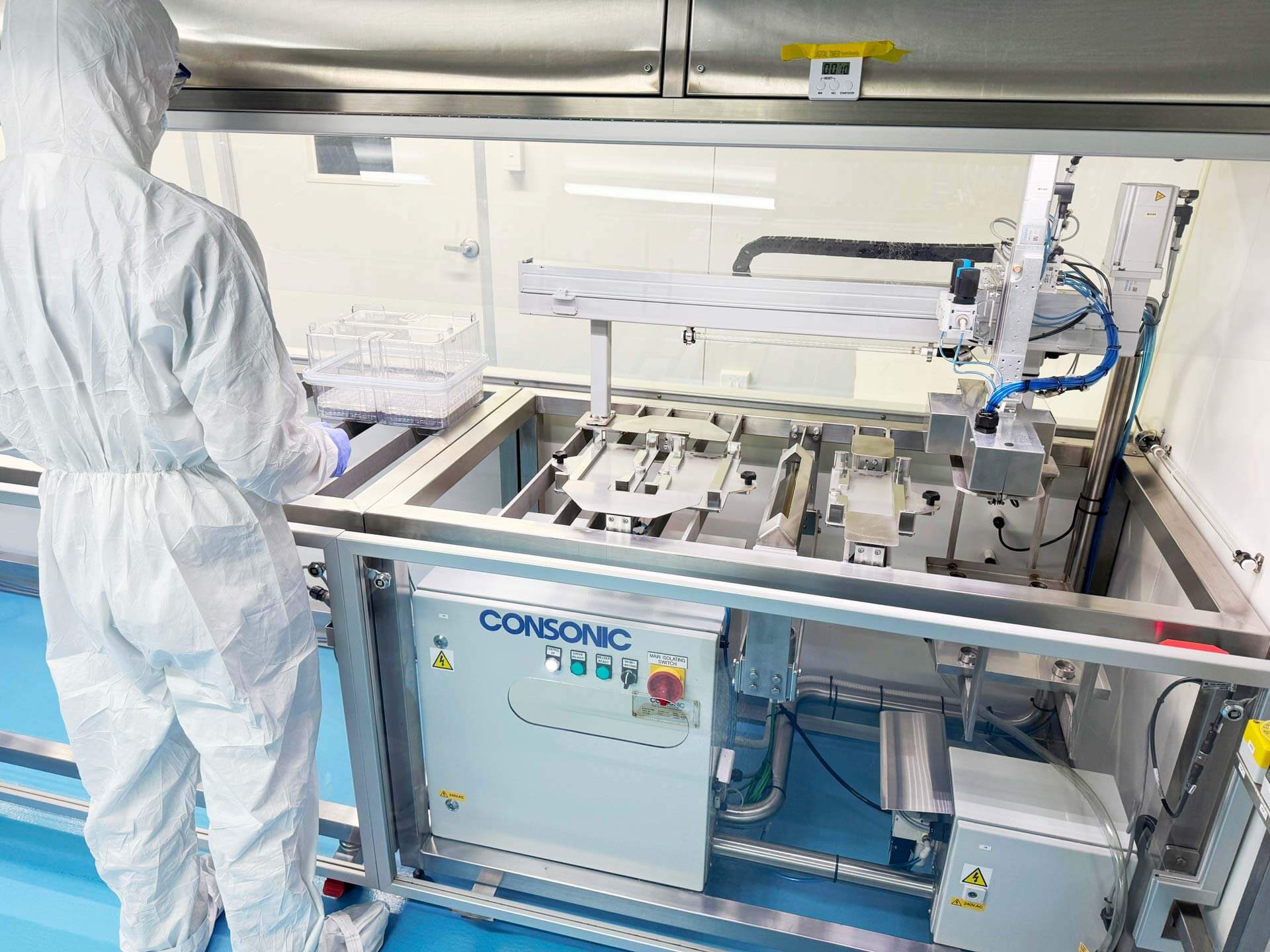
NXT Bioscience is an Australian ag-tech company developing advanced automated plant tissue-culture technology designed to dramatically reduce the cost and time of producing high-health, virus-free plant genetics, including specialised bio-energy crops.
What they bring
Their technology is crucial for the biofuels sector because it enables scalable, affordable deployment of energy-crop plantations on marginal or degraded lands—freeing up prime farmland and improving feed-stock security—thus lowering the supply-chain risk and unit cost of low-carbon liquid fuels.
How NXT Overcomes the Limits of Traditional Tissue Culture
- Automation removes labour bottlenecks, enabling low-cost, high-volume production.
- Bioreactor growth accelerates multiplication and boosts output density.
- Closed, controlled environments minimise contamination and ensure consistency.
- Efficient media use lowers input costs and reduces waste.
- Year-round, climate-independent propagation secures reliable supply.
- Uniform, high-health plants improve establishment and biomass yield.
- Elite bioenergy genetics + automation enable rapid, scalable rollout.
- Proven at commercial scale and protected by international patents.

Who they are
Trawalla Group is the Melbourne-based family office of Alan and Carol Schwartz (established 2007) that deploys “patient capital” across growth, climate and technology investments through its arms such as Trawalla Capital and Trawalla Foundation.
What they bring
Highly respected investor, with investments across the sustainability space, including Wollemi Capital (a climate-specialist investment platform backed and board-supported by Trawalla); the Transition Accelerator (a not-for-profit platform providing catalytic capital to unlock investment in climate solutions in Australia); Allume Energy (developer of SolShare, enabling rooftop solar sharing for multi-unit buildings).
Project MG
Miscanthus × Giganteus
Objective
Develop a large-scale (e.g., 100ML annual production) sustainable aviation fuel (SAF) facility in Australia using miscanthus as the primary feedstock
Rationale
Miscanthus × giganteus is a tall, perennial grass native to Asia, known for its rapid growth and high biomass yield. It is a sterile hybrid (a cross between Miscanthus sinensis and Miscanthus sacchariflorus), which makes it non-invasive and well-suited for cultivation in temperate climates. It has several properties making it a promising biofuel source:
Efficiency: Miscanthus x giganteus is known for its high biomass yield – with 3x more litres per hectare than crops such as corn. This makes it a land efficient source of low carbon liquid fuels compared to other crops.
Efficiency: Miscanthus x giganteus is known for its high biomass yield – with 3x more litres per hectare than crops such as corn. This makes it a land efficient source of low carbon liquid fuels compared to other crops.
Scalability: Feedstocks can potentially be grown quickly if from tissue culture and potential to use marginal lands (there is more than 400 million hectares of marginal land in Australia).
Feasibility: Miscanthus-derived biofuels can be processed using existing infrastructure and technologies, and is a drop-in fuel that can be blended with conventional jet fuel.
Sustainability: Miscanthus has particularly strong carbon benefits - nearly 50% of the carbon miscanthus sequesters is stored in its deep root system, enhancing long-term soil carbon storage. Miscanthus can grow on marginal lands so will minimise impacts on food supply. Several studies have shown that miscanthus has a negative to zero ILUC (indirect land use change) impact, making it a true carbon abatement lever. It also requires minimal fertilizer and has some of the highest water efficiency of any crop.
Location
Australia – finalized during FEL-1
Timeline
FEL-1 (Concept & Feasibility): Oct 2025 – Jun 2026 (9 months)
FEL-2 (Pre-FEED): Jul 2026 – Jun 2027 (12 months)
FEL-3 (FEED): Jul 2027 – Jun 2028 (12 months)
FID: Jul – Dec 2028
Construction: 2029 – 2031
Target COD: 2032
FEL-2 (Pre-FEED): Jul 2026 – Jun 2027 (12 months)
FEL-3 (FEED): Jul 2027 – Jun 2028 (12 months)
FID: Jul – Dec 2028
Construction: 2029 – 2031
Target COD: 2032

Tissue culture of Miscanthus
Grow plants in lab
(2-2.5 years)
Mature in nursery (0.5 years)
(2-2.5 years)
Mature in nursery (0.5 years)

Feedstock
growth
Plant – 3 years to full maturity

Harvesting
and preparation
Grow plants in lab
(2-2.5 years)
Mature in nursery (0.5 years)
(2-2.5 years)
Mature in nursery (0.5 years)

Initial
transformation
Specific technology (e.g., gasification, fast pyrolysis, ethanol) to be selected
Other feedstocks (e.g., woody biomass) could be used as inputs while MG crop growing
Other feedstocks (e.g., woody biomass) could be used as inputs while MG crop growing

Upgrade
to SAF
Choices to be made on standalone plant versus existing refinery
Before upgrading plant, bio-oil can be sold as own product
Before upgrading plant, bio-oil can be sold as own product

Distribution
Transport to end users (e.g., airports, ports)